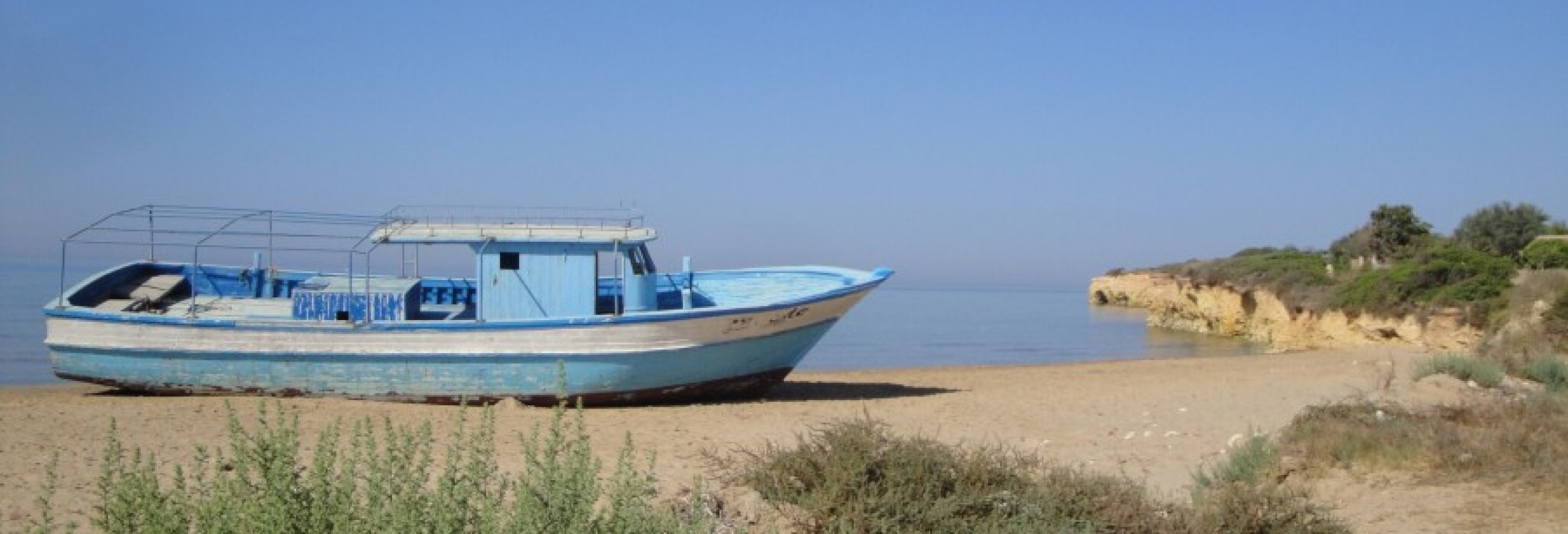
Governo dell’Unione e immigrazione - Italy’s new government and immigration

Italiano

Sembra che dopo il voto del 9 aprile, oltre un mese fa, l’Italia si appresti ad avere un nuovo governo non appena superato il grande scoglio dell’elezione del Presidente della Repubblica.
Ho quindi deciso che fosse arrivato il momento di parlare della parte del Programma dell’Unione che si occupa di immigrazione. Lo farò prevalentemente in inglese, per chi fosse interessato a leggere il programma direttamente basta scaricare la versione PDF disponibile sul sito dell’Unione e andare a pag. 247 del documento intitolata Migranti e Nuovi Italiani.

Il capitolo è diviso in cinque parti:

Per una immigrazione governata

Gestire l’immigrazione con l’Europa e col Mondo

Vie legali per l’immigrazione

Politiche del soggiorno e della cittadinanza

Diritto di Asilo

English

Italians voted at the general election on the 9th of April, more than a month ago, and for different bureaucratic matters the new government is not in place yet. Finally, it seems we are getting closer and after the election of the new President of the Republic that should take place soon, Prodi’s government should start working. So I thought it was time to have a look at the programme of Prodi’s coalition, l’Unione, focusing on the ten pages which tackle issues related to immigration. For those interested in the original document in Italian, you can simply download the full programme on the Unione’s website and go to the chapter entitled Migranti e Nuovi Italiani pag 247.

The chapter is divided in five different parts:

Towards a governed immigration

Managing migration in collaboration with Europe and the rest of the world

Legal routes to immigration

Settlement and citizenship policies

Asylum right

1st of May- Supporting the work of JRS in Malta

Italian

Oggi, Primo Maggio, ho ricevuto con ritardo la notizia che tre settimane fa la comunità dei Gesuiti a Malta ha subito degli attacchi incendiari a sette veicoli appartenenti a persone dell’organizzazione Jesuit Refugee Service dopo aver pubblicato un dossier sul razzismo e la xenofobia a Malta.

Sfortunatamente, questi attacchi non sono i primi in quanto l’anno scorso un prete, l’avvocato di JRS ed altre persone che collaborano con l’organizzazione sono rimaste vittime di attacchi simili.

Ho scritto subito a Padre Pace, direttore di JRS Malta, per manifestargli la mia solidarietà e il mio sostegno. Lo conobbi lo scorso Dicembre ad una conferenza a Malta e mi colpì per la sua conoscenza dei problemi legati all’asilo politico e all’immigrazione, per la sua esperienza e per la moderata, ma al contempo forte e determinata posizione sulla situazione dei migranti a Malta.

Se volete dare il vostro sostegno al lavoro di JRS Malta, credo che la cosa migliore sia quella di non lasciarli soli, cominciando a visitare il loro sito internet sul quale potete capire meglio il lavoro che svolgono, leggere le pubblicazioni e scoprire come potete aiutarli.

English

Today, Labor Day, I received News that three weeks ago the Jesuit community in Malta was the target of an arson attack on seven of its vehicles following publication of a report on racism and xenophobia.
These attacks are not the first ones as similar episodes of violence have accurred before involving a priest, the Jesuit Refugee Service lawyer and other people associated to JRS.

I wrote to Father Pace, who is the director of JRS Malta, to express my solidarity and my support. I met him at a conference in Malta in December 2005 and he impressed me with his knowledge, his experience and the moderate, though firm and resolute, approch to the problems regarding asylum seekers and migrants in Malta.

If you want to support JRS work in Malta, do not leave them alone. I think the best thing you can do is to visit their website and find out about their work, their publications and the way you can help them to help others.

Playing with borders, playing with lives.

I copy below the article of a friend, Karl Schembri, Malta Today News Editor, who proved that last November (2005) during the migrants’ shipwreck tragedy at sea between Malta and Sicily, the Matlese government ordered the army to “keep at a distanceâ€? from the boat. Obviously, the big question which comes to mind is “How many lives could have been saved if they did intervene?”.
Instead, the news that the Maltese army did not do anything to prevent it was received in total indifference both in Malta and Italy.

Riporto un articolo del carissimo amico, Karl Schembri, News Editor di Malta Today, che ha trovato delle prove che indicano che, lo scorso novembre, durante la tragedia del naufragio di una barca piena di immigrati nelle acque fra Malta e la Sicilia, il governo Maltese ordinò all’esercito di mantenere una certa distanza dall’imbarcazione. La domanda sorge spontanea: quante vite si sarebbero potute salvare se invece fossero intervenuti?
Invece, a questa ennesima tragedia del mare, si aggiunge l’indifferenza con la quale quest’ultima notizia è stata accolta a Malta ed in Italia.

Malta Today 16-04-2006

Army rescuers were given orders to “keep at a distance� from a boat carrying 200 migrants in gale force winds last November, hours before 9 of them drowned and at least 20 went missing in a shipwreck off the coast of Sicily, MaltaToday can reveal.
Among entries on the official AFM log book registering the orders given from headquarters via radio to rescuers sent to track the boat on that day, the captain of an AFM airplane and the master of a patrol boat were ordered to “keep at a distance� from the boat people as they were passing through Maltese waters heading north.
Kept at the AFM Operations Room at Luqa Headquarters, the log book lists the orders and actions taken on 17 November 2005 in response to the boat crammed with migrants travelling in force 6 winds.
Seen by MaltaToday and confirmed by a senior spokesman of the Prime Minister, the evidence excludes any kind of communication with the migrants, contradicting statements made by Parliamentary Secretary Tony Abela in parliament in the wake of the tragedy alleging that the AFM had approached the migrants to offer assistance and insisting that this was refused.
Sources told MaltaToday that the recording equipment donated by the American government and meant to keep track of all radio messages sent to and from AFM Headquarters was never used since it was installed, leaving the log book as the only evidence of the dialogue between rescuers and their
superiors.

The first entries on the AFM log book show the AFM were alerted at 1.11pm that a boat packed with immigrants was sighted five miles off It-Tieqa, Gozo. Eleven minutes later, fast rescue boat Melita 1 (M1) was dispatched and at 1.45pm airplane Islander A316 was also sent on site.
At 2.25pm, the airplane pilot reports to base that he has spotted the boat and is above it.
“I’m above them they’re on a big boat they seem to be a big quantity of people… 4.3 miles from Gozo… heading north,� the pilot said.
Written next to it under the heading “action�, the log book documents the response from headquarters to the message radioed from the plane: “Capt. A Mallia informed and told us to monitor them and keep a distance away from them.�
Seven minutes later, the plane reports rough sea conditions, an observation confirmed to have degenerated later with worsening visibility reported by the patrol boat sent out.
A senior spokesman for the Prime Minister confirmed the “keep at a distance� order to MaltaToday, adding that it was “standard practice�.
“It is standard practice in cases where an irregular migrants’ boat is sighted to keep the craft under surveillance in order to verify the intentions of the persons on board,� the spokesman said. “Operational units are kept at a safe distance in order to avoid interfering with the migrants’ boat in any manner which could compromise its safety. Such distance however is not allowed to become so excessive as to prevent AFM personnel from recognising gestures from persons on board the migrants’ boat which may indicate that they require assistance.�
At 3.50pm, a second patrol boat, P32, is sent to accompany the Melita 1 boat heading towards the migrants, which 10 minutes later informs HQ that it had spotted the boat 10 miles north off Gozo.
At 5.30pm, 30 minutes after the plane has landed back at the Luqa airport, Melita 1 reports: “I am 150 metres away from them and visibility is very bad.�
Next to it, a message from the P32 master is recorded as saying that he was 45 minutes away and with the rough sea conditions could not make it faster. Ten minutes later, the Luqa airfield radios a thunderstorm warning.
Melita 1 reports again at 5.45pm that it has lost sight of the boat.
“I’ve lost them I’m not seeing them anymore,� the master reported.
The other boat master says he is four miles away from the location and that he could see the boatpeople occasionally on the radar.
At 5.53pm, the master of the M1 patrol boat reports the weather conditions are getting worse and that, strangely, he was running out of fuel.
“S/Sgt Cutajar warned that with the present sea conditions he cannot continue… M1 informed it is returning to base because running out of fuel and entering for refuelling.�
AFM sources say it was strange the M1 had already run out of fuel, four and a half hours since it left base, given that all AFM vessels were always fully fuelled and meant to last for much longer hours on search and rescue missions.
Another patrol boat, the P52, is called into action at the same time, with the order to “take over� where the M1 had left.
At 6.12pm, the P32 boat informs base about the coordinates of the migrants’ boat, adding that it would reach “their FIR� in approximately two hours – presumably meaning the Italians’ Flight Information Region where Italy would then be responsible for their rescue.
Three minutes later, the same P32 is told to return to base.
“You can start returning but keep following it on the radar,� the entry says.
The next entry, recorded at 6.16pm, states that the Commander of the AFM is informed from HQ about the situation, followed by an interchange of information between the P32 boat out at sea and the P52 which despite the order given 23 minutes earlier had not yet left base.
“Asked with what speed they were moving? … They’re making 8 knots… (In 3 hours they reach Italy),� the entry reads – a calculation that proves to be spot on when three hours later the Italians would intercept the boat in their rescue region but fail to rescue them on time due to the delayed information relayed from Malta.
It took the P52 master yet another 10 minutes to inform base that he was not leaving base at 6.32pm.
“P52. Capt Grixti informed us that with the sea conditions he is not going out he is remaining stand by at base,� the entry reads.
The entry flanking it under “action� confirms that all the patrol boats scrambled into action had abandoned the mission.
“Two boats returning back… M1 and P32. While the P52 will not go out.�
At 7.07pm, M1 reports it has returned to base, while the P32 that is still on its way back reports that it has lost contact of the boat on its radar. Fifty minutes later, the master reports he has arrived “back to base�.
Only at 9.34pm, the log book registers a call from the Italian Coast Guard in Rome, inquiring about a boat full of migrants within its rescue region.

Conflicting evidence
The next day, Malta’s and Italy’s press was inflamed with reports about the shipwreck of the migrants, with nine of them found dead along the coast of Pozzallo, Sicily, between 20 and 30 of them still missing and 177 found on land, including five children and three women.
It was a Friday, the day in which Parliamentary Secretary Tony Abela, who is in charge of the AFM, made his intervention about the budget in Parliament, dedicating a good chunk of his speech to the AFM’s mission the previous night.
He had also repeated his claim to MaltaToday that week, stating that “the migrants refused help� and adding that Italian rescuers had failed to respond to warnings from the Maltese authorities as the boat was approaching Sicily.
His statements were widely reported by the press here and in Italy.
Abela and the AFM came under fire from the Italian media for letting the boat carry on with its voyage of death in the rough seas, but the parliamentary secretary had defended the decision.
“The decision of the Maltese authorities to let the boat packed with migrants head on, despite the tempest, is destined to create controversy,� La Sicilia reported together with La Repubblica, repeating Abela’s claims in parliament that the AFM had only intercepted the boat “in international waters� and that “they refused assistance�.
One of the survivors, a Tunisian national called Hamed Godbari, 44, was reported in the Italian press as saying that they had not seen the Maltese patrol boats, adding that they wanted to proceed to Italy “at all costs�. His testimony, together with that of others’, formed part of an inquiry launched by the Modica inquiring magistrate.
On 20 November, Abela told The Sunday Times: “While the Italian media might be justified in its criticism over an incident last year, on this occasion we did no wrong.�
Pressed with questions in the light of the log book entries seen by MaltaToday, a senior spokesman for the Prime Minister said this week that the orders and action taken on 17 November, co-ordinated by the AFM Operation Centre, were standard practice.
“Direct intervention, with its inherent risks, considering the prevailing weather conditions and the amount of persons on board is undertaken in two cases, that is, (a) when the persons aboard the boat indicate that they require assistance, (b) when a clear attempt is made to illegally enter Maltese territory,� the spokesman said. “Such practice is standard also in joint operations against illegal migration such as those which were organised by EU sea borders centres in which Italian forces also participated. Of course, if the boat is found adrift or its occupants ask for help, assistance is rendered as required within available capabilities and as prescribed by international law.�
The spokesman added that Parliamentary Secretary Tony Abela was kept informed throughout the operation.
“Although it is normal practice that Parliamentary Secretary responsible for Defence Matters is kept informed about such situations, as happened in this case, the direction and co-ordination of such sensitive operations are the sole responsibility of the AFM Operations Centre,� the spokesman said.
Asked how the AFM communicated with the boatpeople so that Abela could then claim that they had refused assistance, the spokesman said: “AFM craft and aircraft were close enough to the migrants’ boat that every opportunity existed for the occupants of the boat to signal for help. However this did not happen and the boat continued steadily in a northerly direction. In the light of poor visibility, use was also made of image enhancing devices and AFM units ensured that they maintained visual contact.�
The spokesman insisted that “at no point while the vessel was under the AFM surveillance was there any indication that the boat was in distress. Nor did the boat people signal any need for assistance�.
Recapitulating the sequence of events, the spokesman said: “The AFM were informed that a boat had been spotted some five miles off the Gozo north-west coast in the early afternoon of the 17 November 2005 by the Malta Police and not as a Search and Rescue case. It was navigating northerly steadily on course. This was reported by the AFM aircraft to be underway as per Articles 17, 18 and 19 of the United Nations Convention on the Law of the Sea 1982, which grants all vessels the right of innocent passage through territorial waters of coastal states.
“The AFM seaborne vessel monitoring the boat was at times as close as 150 metres from the boat and reported that no form of request for assistance was at any time signalled to the AFM vessel’s crew from any of the persons on board of the boat. The AFM vessel remained in the boat’s vicinity for a significant length of time, far in excess to that required by international conventions regarding the safety of persons at sea.�
The spokesman claimed the boat could turn course towards Malta if it felt it was in distress, and that the sea conditions would not have prevented it from changing course and retract to Maltese shores.
“In the circumstances of this case, that is, the prevailing sea conditions (northwesterly swell), it would have been more rational, if the boat was indeed in extremis, for the migrant boat to manoeuvre a change in course towards Malta, thus ensuring following seas rather than brave the beam seas on a northeasterly course,� the spokesman said.
Justifying the P52 boat’s failure to leave base, the spokesman said: “There was no need for the patrol boat P52 to be deployed, as other AFM units that were in the area at no time reported that the incident had degenerated in to a Search and Rescue case; thus in keeping with normal military practice P52 was held in reserve to react to unforeseen developments.�
He said the Italians were informed at 8.07pm via fax, warning them that the boat was approaching Italian waters, with the Italians responding with a phone call only 90 minutes later.
“The Italian Maritime Rescue Co-ordination Centre was informed at 20.07 hours about the boat which was heading in their direction,� the spokesman said. “The Centre was given the relevant information via urgent fax communication that the boat was entering an area in which the Government of the Italian Republic bears whole responsibility for maritime search and rescue. Telephonic communication was initiated by MRCC Rome only after over 90 minutes elapsed from when the urgent fax message had been sent.�
In an interview with MaltaToday earlier this year, when the log book entries were not yet known, AFM Commander Brig. Carmel Vassallo recapitulated his version of events, declaring for the first time that there was no communication with the migrants on board the boat.
“We sent two boats; a rescue launch and a patrol boat which is not that speedy,� the Commander said. “We reached them when they were 10 miles away, they kept moving on. Whoever was captaining that boat must have been one of the best navigators in the world, he kept steering the boat with the waves further up, he was an expert of the sea. At one point we were between 200 or 150 metres away from them, they never looked back. The Italians have no right to say they had to be towed to Malta, and we had no obligation to stop them.�
Asked if there was communication with the migrants, Brig. Vassallo said: “No, but both from the plane and the boat following them, at no point did they see any waving or signalling. Usually even if they don’t have any breakdown they just stop so that we go for them. They did nothing of the sort. When they were about 20 miles up from Gozo I told them to inform the Italians.�

Da Avvenire Domenica 16/04/2006

«Sono sopra di loro… sono una massa di gente su un gran barcone… vanno verso il Nord», dice il pilota. «Continuate a monitorarle, ma mantenete le distanze», ordina la base. Questo dialogo, pubblicato oggi da Malta today, il settimanale dell’isola di Malta che ha deciso di diffondere le trascrizioni dei messaggi via radio tra i soccorritori e la base delle Forze armate maltesi, capovolge la ricostruzione di quanto accaduto in mare il 17 novembre 2005. Se confermate, queste conversazioni rappresenterebbero infatti una svolta clamorosa nell’inchiesta sul barcone, in balìa del mare forza sette, con 200 clandestini a bordo, 29 dei quali morirono travolti dal mare in tempesta prima di arenarsi a un centinaio di metri dalla spiaggia siciliana di Sampieri, a Pozzallo, nel Ragusano. L’ordine di limitarsi a controllare la «caretta», un’imbarcazione di legno di sedici metri in balìa delle onde alte anche cinque metri, e di mantenersi a debita distanza sarebbe arrivato quando il barcone si trovava ancora in acque territoriali maltesi. E non «internazionali» come aveva detto subito dopo la tragedia il sottosegretario alla Difesa della Valletta, Tony Abela. E non ci sarebbe neppure traccia di contatti con i clandestini che, secondo la prima versione ufficiale, «avevano rifiutato i soccorsi». Intanto, confermato dal portavoce del premier, Lawrence Gonzi, e archiviato come standard practice - la prassi insomma -, quell’ordine di tenersi a distanza dal barcone è destinato sicuramente a creare problemi con l’Italia. Malta avrebbe infatti preferito scortare il barcone anziché soccorrere i clandestini, nonostante si trovassero nel suo territorio. Tratte dal log book ufficiale delle Forze militari maltesi, le conversazioni smentirebbero perciò le dichiarazioni delle Autorità . Offrendo una ricostruzione del tutto nuova dell’accaduto. E il settimanale oggi la pubblica integralmente. Il primo messaggio, registrato all’1 e 11 di notte, segnala l’avvistamento del barcone a cinque miglia da Gozo, un’isoletta a nord dell’arcipelago Maltese. Undici minuti dopo, decolla un aereo militare Islander e la nave-pattugliatrice Melita 1 punta la prua verso la «caretta». Alle 2 e 25 la conferma che il velivolo ha raggiunto il barcone. «Sono sopra di loro… Sono una massa di gente su un gran barcone… Vanno da Gozo verso il Nord», dice il pilota. La Centrale di comando è perentoria: «Continuate a monitorarlo, ma mantenete le distanze». Sette minuti dopo, l’aereo segnala una tempesta sul mare, una condizione che degenera e in pochi minuti la visibilità si riduce di colpo a causa delle onde altissime (il mare è forza 7). Alle 3 e 50 la seconda nave delle Forze armate, la P32, va ad affiancare la Melita, che dieci minuti dopo informa la centrale che ha avvistato il barcone a dieci miglia da Gozo. Alle 5 e 30 del mattino la Melita 1 segnala: «Sono a centocinquanta metri di distanza da loro e la visibilità è pessima». Nello stesso tempo, la P32 dice di essere a quarantacinque minuti dal barcone e che per via delle condizioni del mare non può accelerare. Quindici minuti più tardi la Melita segnala di aver perso le tracce del barcone. Stranamente, alle 5 e 53, la nave annuncia il ritorno alla base perché non ha più carburante. (Ma le Forze armate hanno sempre ripetuto che le navi militari maltesi fanno il pieno prima di ogni missione). Altrettanto strano l’ordine di mandare un’altra imbarcazione della Guardia costiera, la P52, rientrato misteriosamente venti minuti dopo senza alcuna spiegazione. Curioso anche il calcolo geografico fatto dai soccorritori della P32: alle 6 e 12 mandano un messaggio alla centrale dicendo che il barcone avrebbe potuto raggiungere l’area di salvataggio italiana in due ore. E così la centrale richiama immediatamente alla base la P32, l’unica barca di salvataggio ancora operativa. E il calcolo è esatto: alle 8 e 7 minuti le Forze armate maltesi avvisano Roma, dicono che c’è un barcone a quaranta miglia dalla costa siciliana. Roma risponde con enorme ritardo, solo alle 9 e 34: con una telefonata alla centrale maltese chiede dettagli. Un paio di ore dopo, davanti alla spiaggia di Sampieri si consuma la tragedia.

“Food” for thoughts

Due giorni fa ho trascorso alcune ore all’Ufficio Immigrazione di Ragusa. Delle tante cose e dei vari comportamenti osservati, una discussione che ho sentito mi ha colpita maggiormente. Un giovane spiegava ad altre persone che era molto contento del panico a proposito dell’influenza dei polli che si sta verificando in Italia perchè il prezzo dei polli è crollato e lui può finalmente comprare carne per la sua famiglia. Ad ogni modo, ha spiegato agli altri, questo è forse il momento più sicuro per mangiare pollo dati i vari controlli che stanno facendo. Ho pensato che questo spiegasse la nostra società molto meglio di qualsiasi discorso sull’immigrazione………

Two days ago I spent a few hours at the Immigration Office in Ragusa. Of the different things and behaviours I observed, one discussion I heard struck me the most. A guy was explaining to some other people how happy he was about the “chicken flu� panic in Italy because the price of chicken meat crushed and he can finally afford some for his family. Anyway, he explained, it is probably the safest time to buy because of the thorough checks they are doing. I think this says more about our society than any other discourse on migration…….

Forced Migration Student Conference 2006

E’ con grande piacere che annunzio la quarta edizione della Forced Migration Student Conference che si terrà presso la University of East London il 18 e 19 March 2006.
Avendo fatto parte del gruppo di ricercatori-dottorandi che concepì ed organizzò la prima e la seconda edizione, sono lieta di constatare che il progetto continua in mano ad altri e ha raggiunto il quarto anno.

It is with great pleasure that I announce the fourth edition of the Annual Forced Migration Student Conference that will take place at the University of East London on the 18 e 19 March 2006. I had the wonderful chance of being part of the first group of post-graduate students that conceived and organised the first and second editions of the event and I can only be pleased knowing that other students are continuing with this project.

The Fourth Annual Forced Migration Student Conference
Refugees: Questions of inclusion and exclusion
University of East London
18-19 March 2006

The global importance of the refugee phenomenon has been reflected in recent years in the growing number of academics conducting research into forced migration. Many postgraduate students are at the cutting edge of such research, undertaking important studies from within a wide variety of academic fields – such as refugee studies, development studies, law, geography, anthropology, sociology and international relations. In order to provide an ongoing forum for post-graduates to come together to share their research, the 4th annual Forced Migration
Student Conference will be hosted by the Refugee Research Centre at the University of East London on 18-19 March 2006. And this year we are pleased to have attracted speakers from across the UK, as well as Europe, Africa, India, and South and North America.

The theme of this year’s conference is Refugees: Questions of inclusion and exclusion, reflecting the often paradoxical nature of refugee policy and its implications for refugees. Panel sessions include discussions on the current restrictive era of asylum policy, inclusive refugee education, experiences of integration, the state control of refugees, refugee camps and internally displaced people. Please see the attached draft programme for more details.

A registration form for the conference is attached and can be returned by post or email to fmsc2006@ntlworld.com
The registration fee for the conference is £10 sterling.
You do not need to be a post-graduate student to attend – we welcome the input of those working with refugees and those with personal refugee experience, as well as academics working in parallel fields.

Marsa Open Centre in Malta - Part II

It has taken me a while to write part two of the visit to the Marsa Centre because I found it difficult to express my contrasting views on the experience.
When we arrived at the Centre, I still had in mind some of the enthusiastic comments I had heard a day earlier during the debate and my expectations were high. As we arrived, the reason why Terry Gosden had been adamant about feeling so far from what he would like to achieve in Marsa, became immediately clear. To my eyes the building, which was once a school, seemed to be in “the middle of nowhere�. In the courtyard several young guys were standing, some of them were chatting, others playing football and others just seemed to be waiting…….!
We were greeted in Terry’s office and accompanied in the main living space where they have organised a small bar and a TV corner, which at that moment showed football matches. Then we were given the chance to talk to people and look around. They were obviously curious about the purpose of our visit, but seemed used to people going to the centre. Some of them hoped we were sent by other EU governments to choose some of them to take to our countries! We were a disappointment indeed!
I talked to a guy who showed me around and translated for others as well. A few asylum seekers complained they had not managed to see a lawyer yet to make sure their cases were heard properly and feared they could be sent back to the country of origin. A family who had been sent back from another EU country according to the Dublin Convention, worried about the future of their children and the fact that they were not attending school in Malta.
Showing me and other colleagues around some of them underlined the problems coming from the fact that so many people have to share the same room (once class rooms), that the bathrooms are outdoor, that certain parts of the buildings have no working lights, etc…… They knew they were free to go out and find a job, but they claimed it was really difficult for them to actually find one in Malta.
It was clear now, that this place was not what I expected. I started wondering whether it was the fact of being used to the extreme conditions of certain closed detention centres that made other people describe this place as an example to follow! But I also realised that they probably referred to the potential of this place. Given the situation, the migrants in the centre and their guide Terry were actually trying their best. With time and more support this place could turn into the model Terry Gosden has in mind and manage to become a useful place of transition were people can recover from the experience of their journey and regain the necessary confidence to start taking care of their own lives again. Clearly, a great obstacle to their empowerment is their often unclear legal position and lack of future prospects. The management of the Marsa Centre cannot be left alone in this and I think needs help to be able to let people help themselves.

Marsa Open Centre in Malta - Part I

Last December, the Eurofor conference in Malta was interesting. A variety of papers on different subjects were presented. This gave me a good chance to hear about areas of research in migration studies which are not directly linked to mine, moreover, I had the opportunity to meet a few friends and other researchers.
Of particular importance to me the two panels on Malta and a trip to the Marsa Open Centre where successful refuge claimants and people with humanitarian protection are accommodated upon release from detention.
Terry Gosden’s presentation, during one of the panels on Malta, and the following debate gave us a first introduction to the issue. He explained what the centre is, how it works, who the residents are and what they do.

He talked about the severe psychological conditions in which people arrive at the centre, traumatised by a conflict in the country of origin, a terrible journey to arrive to Malta and the previous experience in the close detention centres. Then he focused on the way in which he manages the centre and tries to motivate people to regain their agency through self and group empowerment. He stressed the point that they “are not a charity!�, the centre provides people with accommodation and other basic needs, and with guidance for self-organisation encouraging them to pursue certain initiatives as setting up “ethnic restaurants� for residents or buying a TV, or organising prayer groups, etc.

The debate following Gosden’s presentation was characterised by positive comments from some of the Maltese attendees who knew already about the centre and by others who expressed curiosity about the model and its possible application elsewhere in Europe. However, Gosden answered to these comments and questions stressing how far the centre he runs is from what it would like it to be and what the residents, as human beings, deserve. So I was left with even more curiosity about the centre and the way it operates that was clarified when I finally visited it few days later.

I will write about this in the next post. Here I simply want to add a note on the internal debate among researchers about whether visiting the centre was actually appropriate. Some people felt the experience would have felt like visiting a showcase of “human despair� and preferred not to come. Others thought it was important to see first hand what the centre is like and considered that our visit could have been also an interesting chance for the residents to meet other people, talk and pass the time. The most surprising thing for me was the discovery that for some colleagues this was the first time they ever visited a centre where immigrants live and had the chance to talk to so many of them. Too much work behind the desk I guess! Time to make time for some valuable fieldwork…..

Happy 2006 migrations

I have neglected the blog again! Now, I am back and will soon post on the Malta conference and other new issues of interest to me. The drafting of the first research project in Sicily is getting to the final stage and it will be time for fieldwork soon. More on this later….

Now I simply want to wish everybody a great 2006 and wish those who will start their migration or return migration movements this year a safe journey and a happy ending.

From Immigration Politics to Migration Management – Changes in Migration Management

ITALIANO

Domani partirò dalla Sicilia per raggiungere Malta, un’altra delle mie adorate isole del Mediterraneo, per la quarta conferenza Marie Curie della serie intitolata Dalle politiche dell’immigrazione a Migration Management- Cambiamenti del Migration Management. Il mio viaggio seguirà la rotta opposta a quella di molti immigrati che passano da Malta e continuano il loro viaggio disperato verso le coste siciliane.

Il tema della conferenza è International Organisations and the Settlement and Integration of Migrants and Refugees. La conferenza sarà seguita dal seminario su New Governance of Immigration, Refugee Protection and Minority Politics in a new Europe: the EU Enlargement as a challenge to the European Union Migration Regime.

Io aprirò e modererò il workshop intitolato Managing International Flight and Migration: The Case of Malta che vedrà fra i relatori anche Terry Gosden (Manager, Marsa Open Centre) che parlerà del Marsa Open Centre e Neil Falzon, (UNHCR’s Legal Consultant to Malta) che interverrà sul ruolo dell’ACNUR nel contesto maltese.

Per ulteriori informazioni sul resto del programma e sulla conferenza visitate il sito del Berlin Institute for Comparative Social Research

8 – 11 DICEMBRE 2005 MELLIEHA (MALTA)

Maritim Antonine
Hotel and Spa Malta
G. Borg Olivier Street
Mellieha MLH6
Malta
Phone: (+356) 215 209 23
www.maritimmalta.com

ENGLISH

Tomorrow, I will depart from Sicily to reach another of my beloved Mediterranean islands, Malta, where the fourth Marie Curie Conference within the series From Immigration Politics to Migration Management – Changes in Migration Management will take place. I will take the opposite journey of the so many migrants who pass from Malta and then continue their despearet attempt to reach the Sicilian coast.

The theme of the conference is International Organisations and the Settlement and Integration of Migrants and Refugees. This is followed by the Phare Small Scale Seminar on New Governance of Immigration, Refugee Protection and Minority Politics in a new Europe: the EU Enlargement as a challenge to the European Union Migration Regime.

I will open and chair the workshop entitled Managing International Flight and Migration: The Case of Malta which will have presentations from Terry Gosden (Manager, Marsa Open Centre) on Marsa Open Centre: First Experiences, Assessment and Outlook and Neil Falzon, (UNHCR’s Legal Consultant to Malta) on The Role of UNHCR in the Context of Maltese Migration Management.

For more info on the programme of the conference check the Berlin Institute
for Comparative Social Research.

8 – 11 DECEMBER 2005 MELLIEHA (MALTA)

Maritim Antonine
Hotel and Spa Malta
G. Borg Olivier Street
Mellieha MLH6
Malta
Phone: (+356) 215 209 23
www.maritimmalta.com

Ancora morti fra gli immigrati che tentano di attraversare il Medìterraneo - Immigrants continue to die while attempting to cross the Mediterranean

Nella provincia di Ragusa i cittadini reagiscono all’ultima tragedia dell’immigrazione.

Il 17 novembre, a largo della costa ragusana, tra Pozzallo e Sampieri in Sicilia, un barcone con oltre 200 persone è naufragato a cuasa delle pessime condizioni atmosferiche. I migranti a bordo hanno cercato di salvarsi nuotando verso la riva, ma molti hanno perso la vita nel tentativo di raggiungere la costa. Per il momento il conto dei cadaveri resi dal mare è di 25 persone, ma il numero è destinato a salire.

I cittadini della provincia di Ragusa, indignati ancora una volta dall’ennesima tragedia, vogliono far sentire la loro voce e hanno organizzato una marcia verso la spiaggia di Pozzallo che si terrà giorno 1 Dicembre in segno di rispetto verso le vittime e di protesta verso l’indifferenza e il silenzio che ha avvolto questa tragedia.

I numerosi cittadini, le associazioni e le organizzazioni firmatarie di un documento ufficiale protestano anche contro il trattamento degli immigrati che sono arrivati in vita a Pozzallo, ai quali sono state tolte scarpe e cinture per prevenire potenziali fughe.

Ma questa vicenda apre degli interrogativi ancora più gravi a livello Europeo, specialmente nelle relazioni fra Malta, l’Italia e la Regione Sicilia in materia di immigrazione.

Infatti, il barcone con a bordo gli immigrati era stato intercettato dalle motovedette maltesi e secondo la versione riportata dalla stampa locale i migranti hanno rifiutato i soccorsi, proseguendo verso la Sicilia. Le autorità maltesi hanno comunicato a quelle italiane l’arrivo dell’imbarcazione, ma il rimorchiatore partito dal porto di Pozzallo per prestare soccorso, dovette rientrare alla base immediatamente a causa del mare Forza 7 e delle fortissime raffiche di vento da Nord Ovest.

Chiramente, come scrive la stampa locale “la scelta delle autorità maltesi di lasciare proseguire il barcone carico di immigrati, nonostante il mare in tempesta, è destinata a suscitare polemiche.� (LA SICILIA 18 Novembre 2005)

Nonostante, il 18 Novembre, il sottosegretario alla Difesa maltese Toni Abela, abbia puntualizzato che il barcone «era in acque internazionali» e che gli immigrati «hanno rifiutato i soccorsi» e quindi le autorità Maltesi non erano responsabili, rimane la questione morale che concerne tanto il governo Maltese, quanto quello Italiano e l’Europa tutta.

La gente di Ragusa non si rassegna a spiegazioni formali e al silenzio della stampa nazionale, il 1° Dicembre raggiunta la spiaggia deporrà un mazzo di fiori per ricordare le vittime del 17 Novembre 2005, perchè l’indifferenza uccide e distrugge ogni speranza di miglioramento.